
Atrazine Cancer Lawsuit: Justice for Non-Hodgkin Lymphoma and Parkinson's Disease Victims
In November 2025, one of the world's leading cancer research organizations confirmed what scientists and public health advocates have long suspected: atrazine, one of the most widely used herbicides in the United States, is “probably carcinogenic to humans”.
After reviewing decades of published scientific literature, the World Health Organization's International Agency for Research on Cancer (IARC) concluded that there is a link between atrazine exposure and non-Hodgkin lymphoma (NHL), a serious blood cancer that affects tens of thousands of Americans each year. Emerging scientific evidence has also linked atrazine exposure to Parkinson's disease and parkinsonian symptoms, adding to a growing body of research showing that this herbicide poses serious risks to human health.
If you or a loved one developed non-Hodgkin lymphoma or Parkinson's disease after exposure to atrazine, you may qualify for a lawsuit against Syngenta. Whether you were exposed through agricultural work, residential lawn care, groundskeeping, manufacturing, or contaminated drinking water, the pesticide exposure attorneys at Wagstaff Law Firm are here to help you pursue full and fair compensation.
Wagstaff Law Firm has stood at the forefront of toxic pesticide injury litigation for more than a decade. Founding partner Aimee Wagstaff served as lead trial counsel in Hardeman v. Monsanto, the only federal Roundup cancer lawsuit to reach a jury verdict, securing a unanimous $80.2 million verdict that catalyzed an $11 billion national settlement for thousands of cancer survivors and their families. Additionally, our pesticide litigation team successfully resolved over 2,000 paraquat claims where our clients were claiming neurological damage. WLF brings that same trial readiness, scientific expertise, and tenacity to the fight against Syngenta and other atrazine manufacturers.
Contact our atrazine lawyers today for a free and confidential case evaluation. We represent clients on a contingency-fee basis, which means you pay nothing unless we win.
What Is Atrazine?
Atrazine is a herbicide developed by scientists at CIBA-GEIGY (now part of Syngenta) in 1958. Since the 1960s, it has been used extensively across American farmland to kill broadleaf weeds and grasses before they emerge. Approximately 80 million pounds of atrazine are applied each year in the United States, making it the second-most widely used herbicide in the country after glyphosate-based products (the active ingredient in Roundup).
Atrazine works by inhibiting photosynthesis in target plants, effectively starving them of energy. Farmers primarily apply it to corn, sorghum, and sugarcane crops, though it is also widely used on golf courses, residential lawns, highway rights-of-way, and commercial turf. According to the USDA, atrazine is applied to approximately 65 percent of all planted corn acres in the United States.
Key Facts About Atrazine
• The most commonly detected pesticide in American drinking water;
• The most frequently detected herbicide in urban streams;
• So prevalent that it is found in rainwater, fog, ambient air, Arctic ice, and seawater;
• Persists in soil and water for years — sometimes decades — after application;
• Classified by IARC as “probably carcinogenic to humans” (Group 2A) in November 2025; and
• A known endocrine disruptor associated with birth defects, fertility problems, and emerging evidence of neurological harm in addition to cancer.
Atrazine Exposure: Who Is Most at Risk?
Atrazine is used on a wide variety of crops and properties throughout the country. Some people are unknowingly exposed because they live near treated areas or drink water from a contaminated source. Individuals who may be at heightened risk of atrazine exposure include:
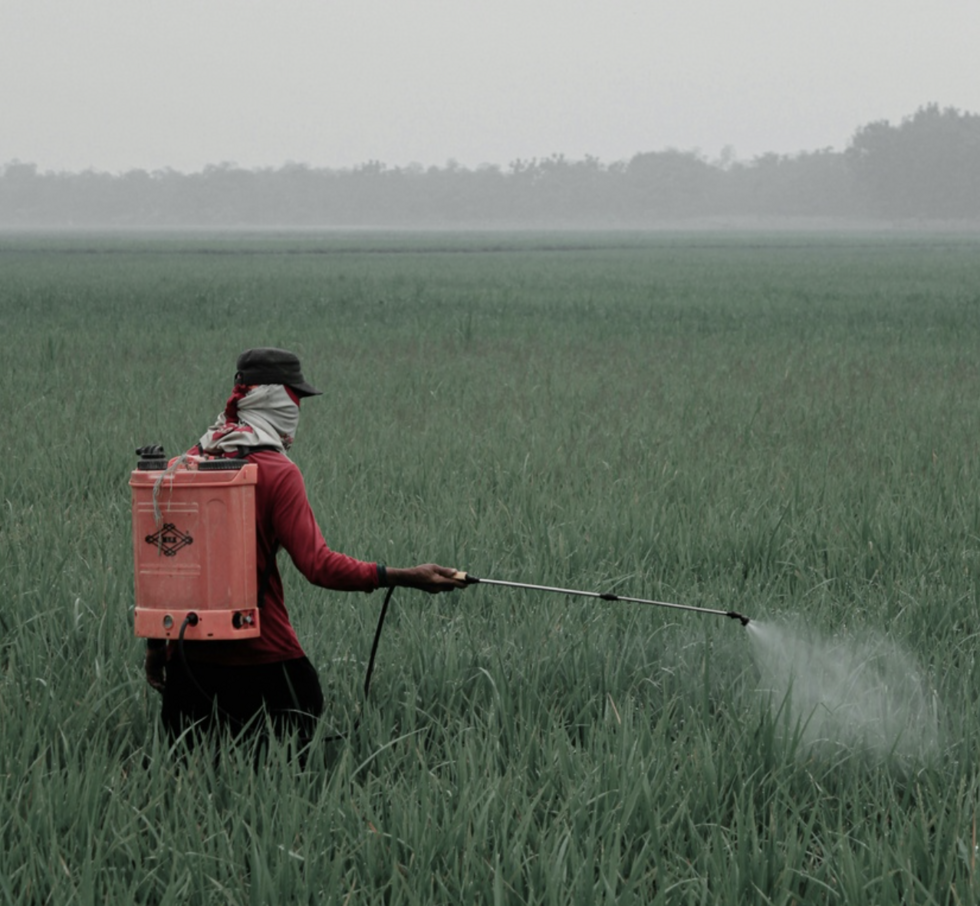
• Agricultural applicators who mix, load, or spray atrazine on crops. Applicators face the highest exposure levels through inhalation and skin absorption during handling and spraying.
• Farmers and farm families living or working on farms where atrazine is applied. Exposure occurs through contact with treated fields, drift from nearby applications, and contaminated clothing brought home.
• Groundskeepers and landscapers who apply atrazine to golf courses, sports fields, highway rights-of-way, parks, or commercial properties.
• Factory and formulation workers employed at facilities that manufacture or formulate atrazine-based products.
• Individuals living near treated land or Superfund sites. According to the CDC, atrazine has been found at roughly 20 Superfund sites across the country.
Who Is Syngenta?
Syngenta, a multinational agricultural corporation headquartered in Basel, Switzerland, invented atrazine and remains its top manufacturer. In 2017, the Chinese state-owned company ChemChina acquired Syngenta for $43 billion — the largest foreign purchase ever by a Chinese state-owned company. While more than 100 companies worldwide now sell atrazine-containing products, Syngenta markets atrazine under the AATREX® brand name and incorporates it into numerous pre-mixed herbicide formulations.
Syngenta has been atrazine's most aggressive defender. Court documents unsealed in prior litigation in Madison County, Illinois, reveal how Syngenta responded as scientific evidence of atrazine's dangers accumulated. According to internal memoranda and emails, the company hired detective agencies to investigate scientists serving on federal advisory panels. The company also commissioned psychological profiles of researchers who raised concerns about atrazine safety, and paid academics to produce favorable studies without requiring disclosure of their financial ties to Syngenta.
These documents show a company that chose to protect its product rather than protect the people using it — a pattern of conduct strikingly similar to what was exposed during the Monsanto Roundup litigation.
Syngenta's Prior Atrazine Settlement
Syngenta has previously been held accountable in atrazine contamination lawsuits separate from current personal injury claims. In 2012, the company paid $105 million to settle a class action brought by community water systems across the Midwest. The lawsuit, filed in federal court in Southern Illinois, alleged that Syngenta knew atrazine would contaminate surface water but sold the product anyway without regard for the cost water providers would bear to filter it out.
Nearly 1,900 community water systems serving millions of Americans were eligible to file claims, and water systems in Illinois, Iowa, Indiana, Kansas, Missouri, and Ohio ultimately received payments. That settlement resolved water-contamination claims only; it did not address the personal injuries suffered by people who developed cancer or Parkinson's disease after being exposed to atrazine.
Does Atrazine Cause Non-Hodgkin Lymphoma?
Yes. Multiple peer-reviewed studies and the November 2025 review by the International Agency for Research on Cancer support the link between atrazine exposure and non-Hodgkin lymphoma. Twenty-two cancer research experts from twelve countries concluded that there was sufficient evidence of carcinogenicity in experimental animals — “based on an increase in the incidence of malignant neoplasms in female rats in multiple well-conducted studies” — and limited evidence of carcinogenicity in humans. The primary positive association in human studies was for non-Hodgkin lymphoma.
How IARC Reached Its Conclusion
In animal studies, IARC officials found that atrazine can cause:
• Alteration of normal cell growth
• DNA damage in multiple organs
• Hormone disruption
• Inflammation
• Oxidative stress
• Suppression of the immune system
IARC also concluded that atrazine acts on the body through multiple recognized mechanisms of cancer development. The human evidence was strongest for non-Hodgkin lymphoma, and within that category, for the specific subtype carrying the chromosomal translocation t(14;18), which is most commonly associated with follicular lymphoma and certain diffuse large B-cell lymphomas.
In addition to the IARC review, decades of case-control studies and prospective cohort research — including studies in Kansas, Nebraska, Iowa, and Minnesota, as well as the U.S. National Cancer Institute's Agricultural Health Study — have reported elevated NHL risk among pesticide applicators and farmers with substantial atrazine exposure. The 2024 update of the Agricultural Health Study found significant positive associations between atrazine and non-Hodgkin lymphoma in applicators diagnosed before age 50, with risk rising across exposure categories.
What Is Non-Hodgkin Lymphoma?
Non-Hodgkin lymphoma (NHL) is a type of cancer that begins in the white blood cells (lymphocytes) of the lymphatic system. NHL can start in any part of the lymphatic system, including the lymph nodes, spleen, bone marrow, or digestive tract. Treatment depends on the subtype and stage of disease.
Types of non-Hodgkin lymphoma include:
• B-cell lymphoma: B cells produce antibodies that fight infection. B-cell lymphoma is the most common form of NHL.
• T-cell lymphoma: T cells attack germs and abnormal cells and regulate the immune response.
NHL is also grouped by how fast it grows. Indolent lymphomas — most commonly follicular lymphoma — grow slowly. Aggressive lymphomas, including diffuse large B-cell lymphoma (DLBCL), grow and spread quickly. Other recognized subtypes include marginal zone lymphoma, mantle cell lymphoma, small lymphocytic lymphoma / chronic lymphocytic leukemia (SLL/CLL), Burkitt lymphoma, and peripheral T-cell lymphoma.
Atrazine and Parkinson's Disease: An Emerging Scientific Link
In addition to the established link between atrazine and non-Hodgkin lymphoma, a growing body of scientific evidence suggests that atrazine exposure may also increase the risk of Parkinson's disease (PD) and parkinsonian symptoms. While the science here is still developing, Wagstaff Law Firm is also investigating cases involving people with direct exposure to atrazine, who later developed PD and parkinsonian symptoms.
To learn more about Parkinson's disease or parkinsonian symptoms and atrazine click here Atrazine and Parkinson's Disease: An Emerging Scientific Link | Wagstaff Law Firm or contact us today for a free and confidential case evaluation.
Who Qualifies for the Syngenta Atrazine Lawsuit?
If you developed non-Hodgkin lymphoma, Parkinson's disease, or parkinsonian symptoms after exposure to atrazine, you may qualify for the Syngenta atrazine lawsuit. People with potential claims include:
Farmers and agricultural applicators who mixed, loaded, or sprayed atrazine on crops. These applicators typically face the highest exposure levels through inhalation and skin absorption during handling and spraying.
Farmworkers and farm families who lived or worked on farms where atrazine was applied. Exposure occurs through contact with treated fields, drift from nearby applications, and contaminated clothing brought home.
Groundskeepers and landscapers who applied atrazine to golf courses, sports fields, highways, parks, or commercial properties.
Manufacturing and formulation workers employed at atrazine production or pre-mix facilities.
If you or a loved one used atrazine and developed non-Hodgkin lymphoma, Parkinson's disease, or parkinsonian symptoms, contact us today for a free and confidential case evaluation.
Is Atrazine Dangerous?
Yes — especially for workers who handle and apply atrazine. Congressional findings state plainly that atrazine “has been linked to cancer, birth defects, and reproductive harm.” Scientific evidence has accumulated over decades, and a growing body of research now points to neurological harm as well. Some of the harms associated with atrazine exposure include:
Endocrine Disruption. Atrazine is an endocrine disruptor, which means it interferes with the body's hormonal system. The endocrine system regulates virtually every biological process, from brain development to reproduction to immune function. Chemicals that disrupt this system can cause harm at very low doses — sometimes lower than traditional toxicology testing detects.
Immune System Suppression. The November 2025 IARC assessment found strong evidence that atrazine suppresses the immune system. In laboratory studies, atrazine decreased leukocyte counts and effector T cells while increasing regulatory T cells. These changes can impair the body's ability to detect and destroy cancer cells — a recognized pathway to lymphoma development.
Neurological Harm. Laboratory and animal studies have shown that atrazine is directly toxic to dopamine-producing neurons in the brain, the same neurons that are progressively lost in Parkinson's disease. Population studies have found increased Parkinson's disease risk among people exposed to atrazine through agricultural application and contaminated drinking water. While the science is still developing, the evidence points to atrazine as an emerging risk factor for Parkinson's disease and parkinsonian symptoms.
Reproductive and Developmental Harm. Studies have linked atrazine exposure in drinking water to increased risks of small-for-gestational-age babies and birth defects, including choanal atresia, gastroschisis, spina bifida, cleft lip, congenital heart defects, and urogenital abnormalities.
Hormonal Disruption. Research comparing women in Illinois (high atrazine use) to women in Vermont (low atrazine use) found that Illinois women experienced more menstrual irregularities, longer follicular phases, and decreased hormone levels. In animal studies, atrazine reduced testosterone, luteinizing hormone, and follicle-stimulating hormone levels.
Oxidative Stress and Inflammation. IARC concluded that atrazine causes oxidative stress and inflammation, increasing reactive oxygen species and damaging DNA. These are recognized mechanisms through which chemicals cause cancer and neurodegenerative disease.
Is Atrazine Banned?
Yes — in much of the world, but not in the United States. At least 60 countries have banned atrazine. The European Union banned the chemical in 2004 because regulators determined groundwater contamination was unavoidable and Syngenta could not demonstrate that atrazine levels would remain below 0.1 micrograms per liter — a standard 30 times stricter than the U.S. limit.
Switzerland — where Syngenta is headquartered — banned atrazine in 2012. France has gone further, enacting a 2022 law that forbids not only the use of banned pesticides like atrazine but also their manufacture and export. Notably, France has formally recognized Parkinson's disease as an occupational disease for agricultural workers since 2012, and in March 2024 Germany issued a similar recommendation — reflecting growing international consensus that pesticide exposure is a meaningful risk factor for neurodegenerative disease.
Meanwhile, despite these international restrictions, atrazine remains readily available in the United States. Investigative reports have documented that Syngenta continues to manufacture atrazine in Europe for export to countries with weaker regulations, selling abroad what it is not permitted to sell in its home country.
Another Example of Scientific Fraud: Atrazine, Roundup, and the IBT Scandal
Atrazine and Roundup share more than just their IARC “probably carcinogenic” classification. Both products were initially registered by EPA based on toxicology studies conducted by Industrial Bio-Test Laboratories — a lab whose president and senior officials were later convicted in federal court of scientific fraud.
At its peak, Industrial Bio-Test Laboratories (IBT) was the largest commercial toxicology lab in the country and performed roughly one-third of all toxicology testing in the United States. When the FDA and EPA finally audited IBT's work in the late 1970s, they invalidated approximately 71 percent of the studies they reviewed. EPA later estimated that roughly 80 percent of IBT's data was nonexistent, fraudulent, or invalid. FDA officials described it as “the most massive scientific fraud ever committed in the United States, and perhaps the world.” Investigators documented test animals listed as dead and mated on the same day, autopsy records for animals still alive, and systematic under-reporting of tumors. One IBT toxicologist later said he was “ashamed” to put his name to the work. In 1981, IBT's president and three top lab officials were federally indicted and, later, convicted in 1983.
Ciba-Geigy — Syngenta's predecessor — was one of IBT's clients. IBT performed the chronic-toxicity and cancer studies used to support EPA registration of atrazine. Monsanto, similarly, used IBT to conduct toxicology studies on the original Roundup herbicide. Both herbicides reached the American market on the strength of testing performed by a laboratory that was later proven to be a criminal enterprise.
Faced with the prospect of pulling hundreds of pesticide registrations, EPA chose not to. Instead, the agency negotiated with industry to keep the products on the market while manufacturers “replaced” the fraudulent studies — a process that took years. More than eight years after the IBT fraud was uncovered, EPA continued to allow atrazine sales while Ciba-Geigy repeatedly failed to substitute valid testing. Just like the dangerous and toxic herbicide, Roundup, both products are still sold in the United States today.
But, to date, Syngenta has not faced any accountability for its continued sale (and defense of) atrazine. Our pesticide litigators want to change that and are committed to fighting for surviviors and their families.
Atrazine Cancer Lawsuit FAQ
How much does it cost to hire an atrazine lawyer?
Wagstaff Law Firm handles atrazine cases on a contingency-fee basis, which means there are no upfront costs or fees. It's very simple: if we don't win, you don't pay.
What compensation can I recover in an atrazine lawsuit against Syngenta?
Compensation in successful cases may include both economic and non-economic damages. Economic damages cover medical expenses (past and future), lost wages, loss of earning capacity, rehabilitation costs, transportation expenses for treatment, and assistive equipment — which can be substantial for both cancer treatment and the long-term care often required for Parkinson's disease. Non-economic damages include pain and suffering, emotional distress, loss of enjoyment of life, mental anguish, disfigurement, and loss of consortium. In wrongful death cases, families may pursue funeral expenses and loss of financial support. Punitive damages may be awarded if a jury finds the defendant's conduct was reckless, malicious, or fraudulent.
What is the statue of limitations for atrazine cases?
The statute of limitations for atrazine cases varies by state. The deadline to file your case may depend on the state where the exposure took place, when you were diagnosed, and when you discovered (or reasonably should have discovered) the connection between your illness and atrazine. The best way to determine your eligibility is to contact our firm for a free, no obligation case evaluation.
Do I need to hire a lawyer for an atrazine claim?
You really should. Mass tort litigation is highly complex. Pesticide injury cases typically involve hundreds or thousands of plaintiffs, multiple defendants, complex legal arguments, obtaining scientific and medical evidence, and coordination among multiple groups of plaintiffs. A law firm with mass tort experience — and especially experience litigating against large chemical companies, like Syngenta— has the resources, scientific expertise, and trial experience needed to take on corporate defendants. Wagstaff Law Firm's team of experience pesticide attorneys brings all three.
What products contain atrazine?
Atrazine is found in hundreds of herbicide formulations. Products that contain atrazine include:
- AAtrex (Syngenta)
- Hi-Yield Atrazine
- Southern Ag Atrazine
- St. Augustine Weed Killer
- RPI Atrazine
- Bicep II Magnum (Syngenta pre-mix)
- Callisto Xtra (Syngenta pre-mix)
While Syngenta is the most prominent atrazine manufacturer, more than 100 companies sell atrazine-containing products in the United States.
How do I know if I was exposed to atrazine?
Many people do not realize they were exposed to atrazine until they begin to suffer adverse health effects. Common indicators include working in agriculture, applying herbicides to crops or lawns, living or working on or near treated farmland, working at an atrazine manufacturing or formulation facility, or drinking water from a well or municipal system in an agricultural region. Environmental testing can help confirm whether the soil or water near a residence is contaminated with atrazine.
Can I file an atrazine lawsuit if my family member passed away from NHL?
Yes. Family members who have lost a loved one to non-Hodgkin lymphoma after atrazine exposure may be able to file a wrongful death atrazine lawsuit. The best way to determine if you qualify is to consult with an experienced atrazine attorney.
Has the EPA banned atrazine?
No. Atrazine has not been banned by the Environmental Protection Agency. It is classified as a “restricted use pesticide,” meaning the herbicide must be used by or under the supervision of a certified applicator. Despite the November 2025 IARC classification and the bans in more than 60 other countries, atrazine remains in widespread use in the United States.
Get Started: Free Atrazine Lawsuit Case Review
If you or a loved one was exposed to atrazine and diagnosed with non-Hodgkin lymphoma, Parkinson's disease, or parkinsonian symptoms, contact Wagstaff Law Firm today. Our pesticide exposure attorneys are reviewing cases nationwide on a contingency-fee basis. There is no cost to you unless we win.
Call: (303) 376-6360
Or complete our free online case evaluation form.